构建跨模型通用 Agent:OpenAI, Claude, Gemini 协议适配
摘要: 本文剖析了 OpenAI、Anthropic (Claude) 和 Google (Gemini) 在 API 协议上的核心差异,结合 OpenCode 框架的源码实践,探讨了如何集成 Skills 和 MCP (Model Context Protocol) 等新一代 Agent 能力。
1. 引言:为什么需要跨模型适配?
在使用 AI Agent 时,深度绑定单一厂商存在显著风险:
- 成本波动:不同模型的 Token 定价策略差异巨大。
- 服务稳定性:单一 API 可能遭遇宕机或限流。
- 能力偏科:Claude 在代码生成上表现优异,Gemini 则拥有超长 Context Window 优势。
为了让 Agent 能够“博采众长”,我们需要抹平它们之间的协议鸿沟。
2. 协议差异深度解析
下表总结了三大主流模型厂商在 API 调用上的关键差异:
| 特性 | OpenAI v1 | Anthropic | Google Gemini |
|---|---|---|---|
| User Message | { role: "user", content: "..." } |
{ role: "user", content: "..." } |
{ role: "user", parts: [...] } |
| Image Input | image_url (URL/Base64) |
source(URL/Base64) |
inlineData (Base64) / fileData |
| Tools Definition | tools (JSON Schema) |
tools (JSON Schema) |
function_declarations (OpenAPI) |
2.1 OpenAI
- 基础协议: Chat Completions API - 行业事实标准。
curl https://api.openai.com/v1/chat/completions \
  -H "Content-Type: application/json" \
  -H "Authorization: Bearer $OPENAI_API_KEY" \
  -d '{
    "model": "VAR_chat_model_id",
    "messages": [
      {
        "role": "developer",
        "content": "You are a helpful assistant."
      },
      {
        "role": "user",
        "content": "Hello!"
      }
    ]
  }'
- 视觉 (Vision): Vision Guide -
image_url详情与多图处理。
curl https://api.openai.com/v1/responses \
  -H "Content-Type: application/json" \
  -H "Authorization: Bearer $OPENAI_API_KEY" \
  -d '{
    "model": "gpt-4.1-mini",
    "input": [
      {
        "role": "user",
        "content": [
          {"type": "input_text", "text": "what is in this image?"},
          {
            "type": "input_image",
            "image_url": "https://api.nga.gov/iiif/a2e6da57-3cd1-4235-b20e-95dcaefed6c8/full/!800,800/0/default.jpg"
          }
        ]
      }
    ]
  }'
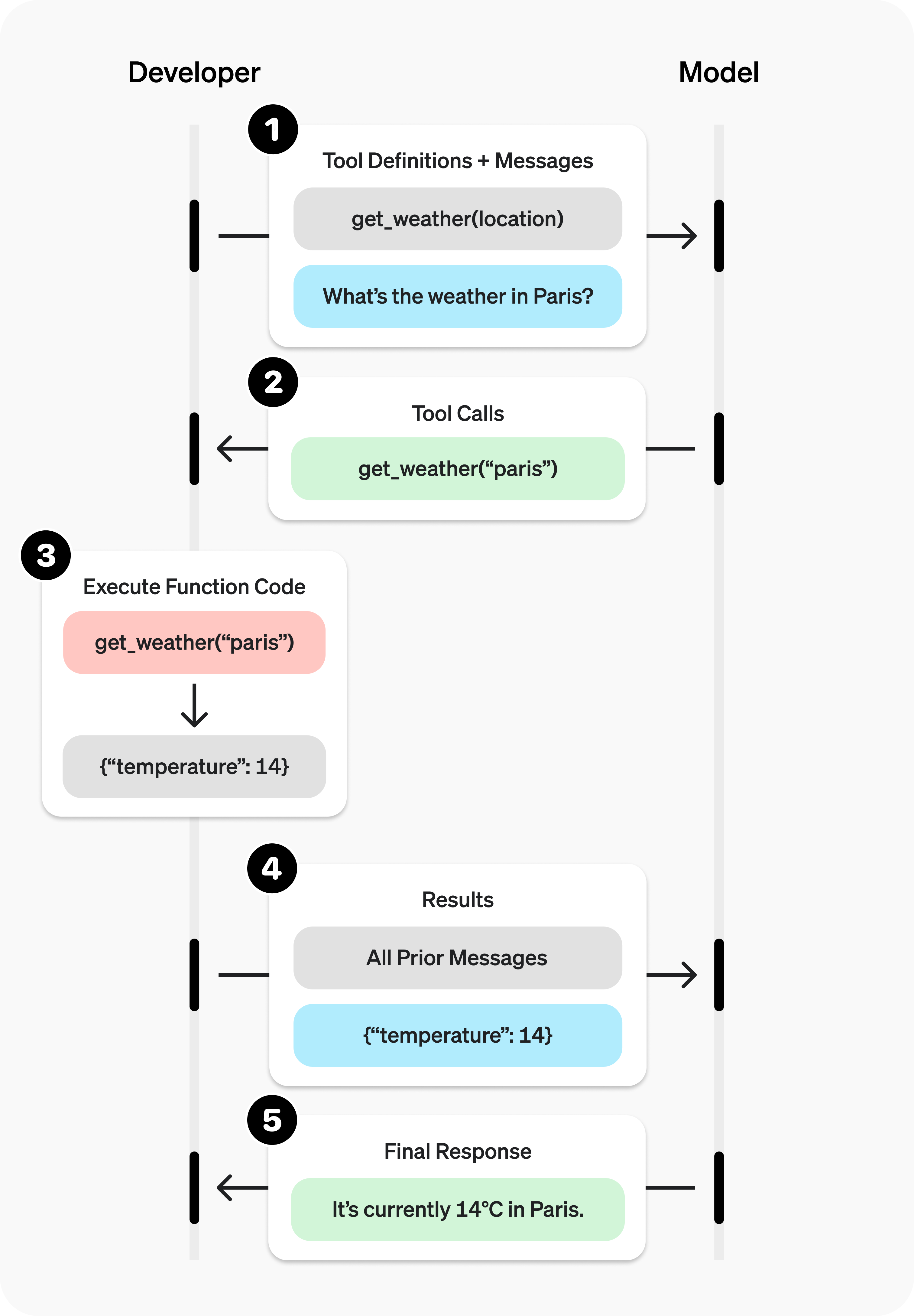
- 工具调用: Function Calling -
tools定义与tool_calls响应流。
# 1. Define a list of callable tools for the model
tools = [
    {
        "type": "function",
        "name": "get_weather",
        "description": "Get the current weather in a given location",
        "parameters": {
          "type": "object",
          "properties": {
            "location": {
              "type": "string",
              "description": "The city and state, e.g. San Francisco, CA"
            }
          },
          "required": ["location"]
        }
    },
]
Anthropic (Claude)
- 基础协议: Messages API - 顶层
system参数与content块结构。
curl https://api.anthropic.com/v1/messages \
    -H 'Content-Type: application/json' \
    -H 'anthropic-version: 2023-06-01' \
    -H "X-Api-Key: $ANTHROPIC_API_KEY" \
    --max-time 600 \
    -d '{
          "max_tokens": 1024,
          "messages": [
            {
              "content": "Hello, world",
              "role": "user"
            }
          ],
          "model": "claude-opus-4-6"
        }'
- 视觉 (Vision): Vision -
base64编码要求与imageblock 构造。
curl https://api.anthropic.com/v1/messages \
  -H "x-api-key: $ANTHROPIC_API_KEY" \
  -H "anthropic-version: 2023-06-01" \
  -H "content-type: application/json" \
  -d '{
    "model": "claude-opus-4-6",
    "max_tokens": 1024,
    "messages": [
      {
        "role": "user",
        "content": [
          {
            "type": "image",
            "source": {
              "type": "base64",
              "media_type": "image/jpeg",
              "data": "'"$BASE64_IMAGE_DATA"'"
            }
          },
          {
            "type": "text",
            "text": "Describe this image."
          }
        ]
      }
    ]
  }'
- 工具调用: Tool Use - 详解
tool_use与tool_result块的交互。
curl https://api.anthropic.com/v1/messages \
  -H "content-type: application/json" \
  -H "x-api-key: $ANTHROPIC_API_KEY" \
  -H "anthropic-version: 2023-06-01" \
  -d '{
    "model": "claude-opus-4-6",
    "max_tokens": 1024,
    "tools": [
      {
        "name": "get_weather",
        "description": "Get the current weather in a given location",
        "input_schema": {
          "type": "object",
          "properties": {
            "location": {
              "type": "string",
              "description": "The city and state, e.g. San Francisco, CA"
            }
          },
          "required": ["location"]
        }
      }
    ],
    "messages": [
      {
        "role": "user",
        "content": "What is the weather like in San Francisco?"
      }
    ]
  }'
Google Gemini
- 基础协议: REST API Reference 结构差异最大,使用
parts数组。
curl "https://generativelanguage.googleapis.com/v1beta/models/gemini-2.0-flash:generateContent?key=$GEMINI_API_KEY" \
    -H 'Content-Type: application/json' \
    -X POST \
    -d '{
      "contents": [{
        "parts":[{"text": "Write a story about a magic backpack."}]
        }]
       }'
- 视觉 (Vision): Vision -
inlineData(Base64) 与fileData(File API) 的区别。
curl "https://generativelanguage.googleapis.com/v1beta/models/gemini-3-flash-preview:generateContent" \
-H "x-goog-api-key: $GEMINI_API_KEY" \
-H 'Content-Type: application/json' \
-X POST \
-d '{
    "contents": [{
    "parts":[
        {
            "inline_data": {
            "mime_type":"image/jpeg",
            "data": "'"$(base64 $B64FLAGS $IMG_PATH)"'"
            }
        },
        {"text": "Caption this image."},
    ]
    }]
}'
- 工具调用: Function Calling -
function_declarations配置与functionResponse格式。
curl "https://generativelanguage.googleapis.com/v1beta/models/gemini-3-flash-preview:generateContent" \
  -H "x-goog-api-key: $GEMINI_API_KEY" \
  -H 'Content-Type: application/json' \
  -X POST \
  -d '{
    "contents": [
      {
        "role": "user",
        "parts": [
          {
            "text": "What is the weather like in San Francisco?"
          }
        ]
      }
    ],
    "tools": [
      {
        "functionDeclarations": [
          {
            "name": "get_weather",
            "description": "Get the current weather in a given location",
            "parameters": {
            "type": "object",
            "properties": {
                "location": {
                "type": "string",
                "description": "The city and state, e.g. San Francisco, CA"
                }
            },
            "required": ["location"]
            }
          }
        ]
      }
    ]
  }'
3. 解决方案:Unified Interface
为了解耦业务逻辑,我们需要定义一套标准的 TypeScript 接口,并在底层实现适配器。这里推荐基于 Vercel AI SDK Core (ai 包) 进行扩展,它已经处理了大部分底层的流式传输和基础归一化工作。
3.1 统一定义 (Standard Definition)
我们可以定义一个通用的 LanguageModelV3CallOptions 接口,屏蔽各厂商的参数差异:
参考 vercel/ai 的 LanguageModelV3CallOptions
// Vercel AI SDK
export type LanguageModelV3CallOptions = {
    prompt: LanguageModelV3Prompt;
    responseFormat?:
    | { type: 'text' }
    | {
        type: 'json';
                schema?: JSONSchema7;
                name?: string;
                description?: string;
        };
    tools?: Array<LanguageModelV3FunctionTool | LanguageModelV3ProviderTool>;
    toolChoice?: LanguageModelV3ToolChoice;
    ...
};
3.2 适配器模式 (Adapter Pattern)
利用 Vercel AI SDK (ai 包) 作为底层设施,并在此之上构建中间及适配层。 Tools 协议适配: 各 Provider 独立实现工具调用的协议转换,将统一的 tools 定义映射为各厂商的原生格式。
- Google: 转换为
functionDeclarations格式。参考 google-prepare-tools.ts - Anthropic: 转换为 Anthropic 原生 tool 格式。参考 anthropic-prepare-tools.ts
4. 新能力集成 Skills
Skills 是 OpenCode 扩展 Agent 能力的核心机制,它不仅仅是简单的上下文注入,更是一套按需加载的领域知识管理与分发系统。通过 skill 工具,Agent 可以像安装插件一样,在运行时动态获取特定任务所需的专业知识、工作流 SOP 和代码规范,而无需在初始 Prompt 中预加载海量信息。
核心机制与工作流
- 注册与发现 (Discovery)
- Agent 启动时注册通用的
skill工具,其描述包含动态生成的<available_skills>列表。 - LLM 通过此列表”感知”潜在能力,仅在识别到特定任务意图时才触发调用。
- Agent 启动时注册通用的
- 按需加载 (On-Demand Loading)
- LLM 主动调用
skill({ name: "..." })请求特定能力。 - Agent 读取本地对应的资源文件(Markdown),其中封装了该领域的详细指令、API 定义、代码模板及最佳实践。
- LLM 主动调用
- 上下文注入 (Context Injection)
- 加载的内容以
<skill_content>块形式作为tool_result返回。 - LLM 立即将这些新知识整合进当前上下文,”学会”特定技能,从而在后续操作中严格遵循特定的工程规范或业务逻辑。
- 加载的内容以
设计优势
- Token 效率: 避免将所有文档一次性塞入 Context Window,大幅降低 Token 消耗并减少无关信息的干扰。
- 高可扩展性: 新增能力只需添加 Skill 描述文件,无需修改 Agent 核心代码。
- 专业深度: 允许针对特定领域(如内部组件库、DevOps 流程)提供极尽详细的指导,确保 Agent 输出符合生产级标准。
5. 总结
构建跨模型通用 Agent 并非易事,但通过分层架构可以有效应对挑战:
- 协议适配层: 识别 OpenAI、Claude、Gemini 在 System Prompt、Vision、Tools 上的差异,利用统一接口(如 Vercel AI SDK)进行屏蔽。
- 能力扩展层:
- 利用 Skills 机制实现领域知识的按需加载,解决 Token 瓶颈。
- 其他:引入 MCP 协议,实现与外部生态工具的标准化互联。
这种架构不仅保证了 Agent 在不同模型间的可移植性,还为其未来的能力演进奠定了坚实基础。